
Engineering demonstration using public video feeds. Not independently benchmarked.
Engagement: AI technology demonstration · Delivery: Integrated computer-vision system built in ~3 weeks
The problem
Traffic management relies heavily on cameras, but video alone doesn’t tell operators where attention is needed. Could existing cameras become intelligent monitoring systems, without new roadside hardware?
See StreetSense in action
The workflow at a glance
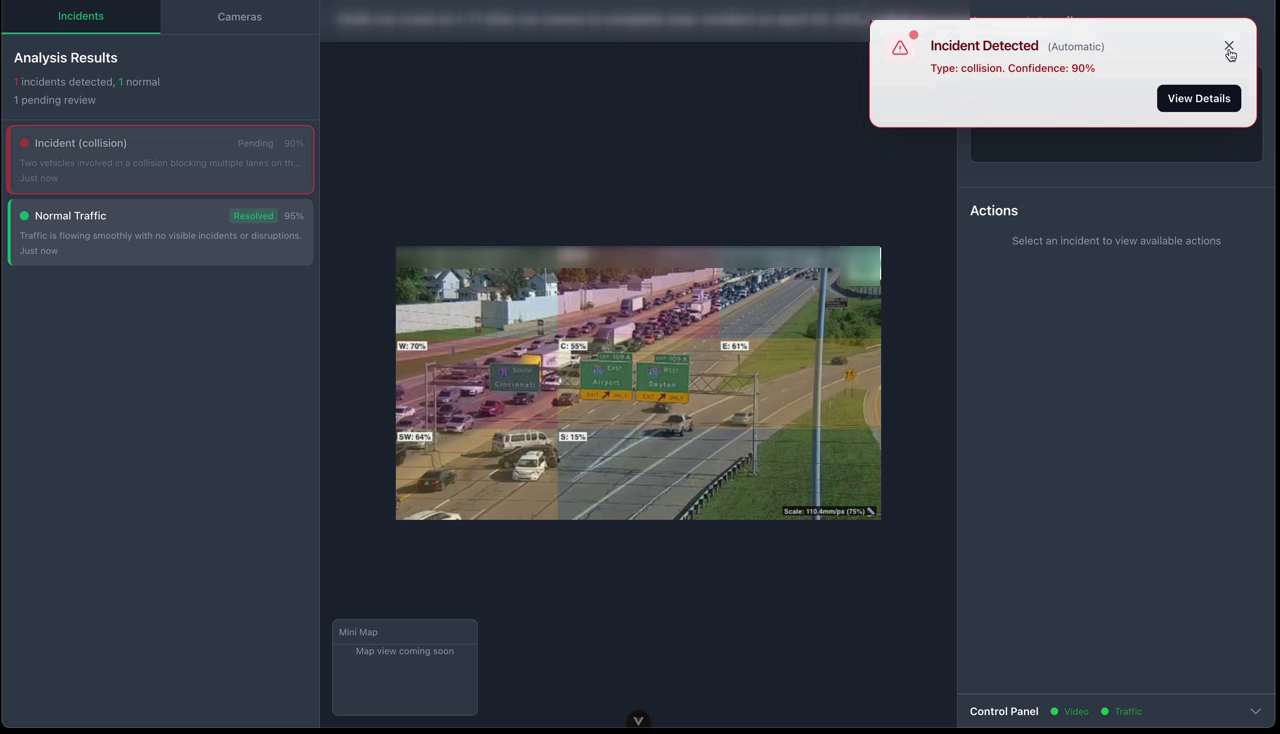
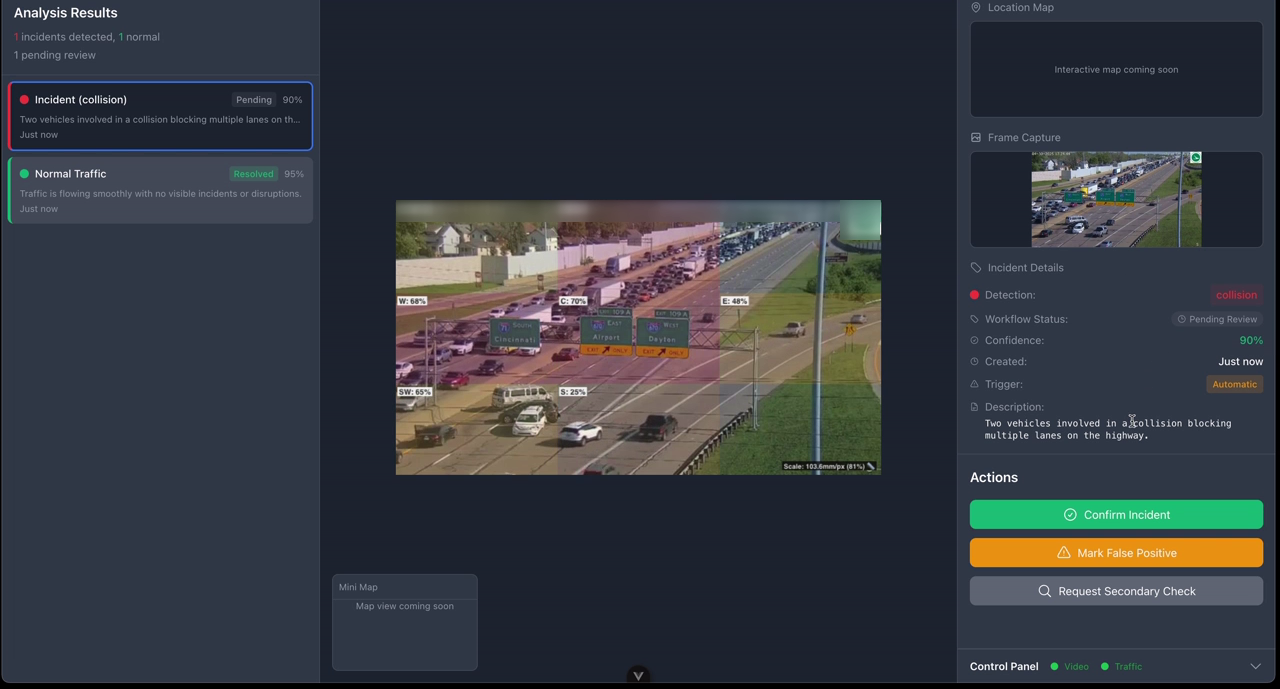
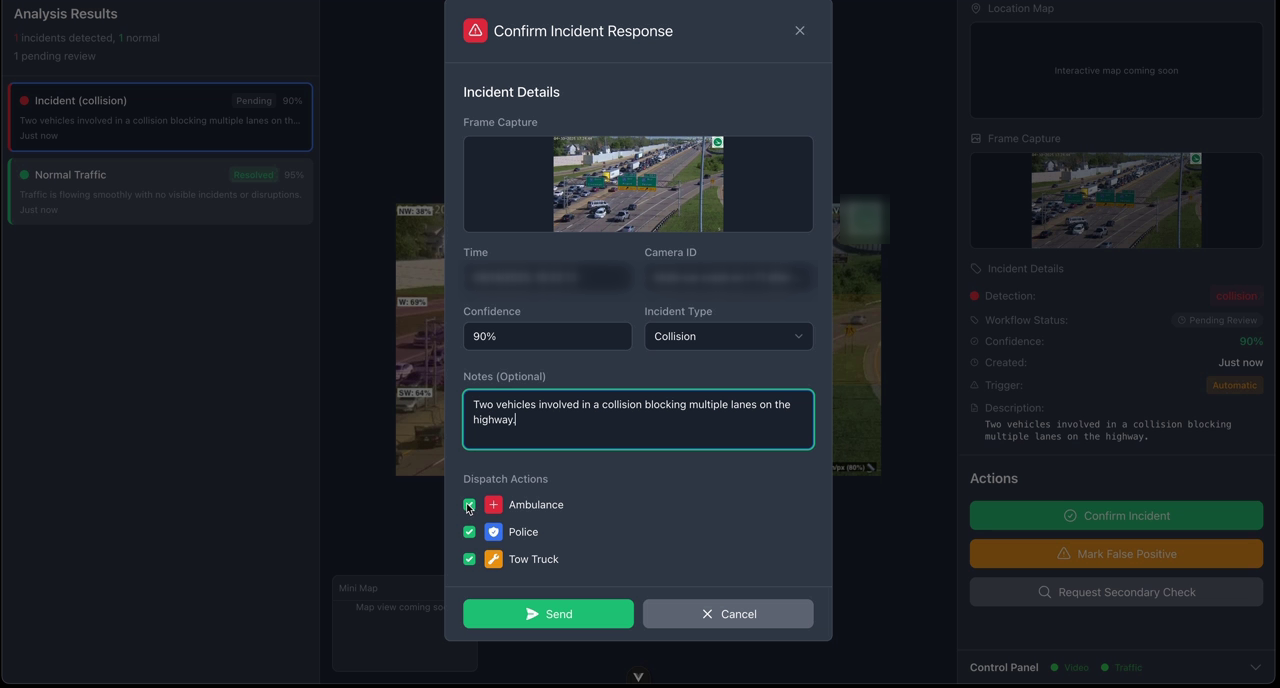
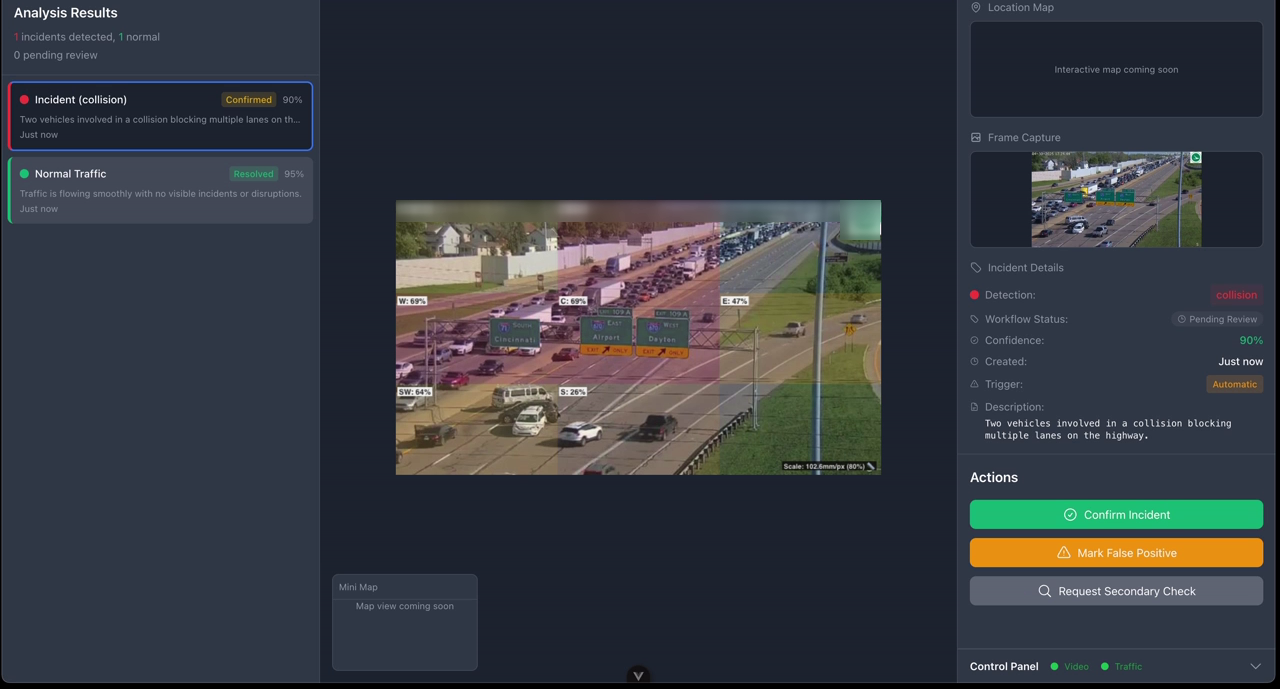
Identifying overlays and text blurred throughout.
What we built
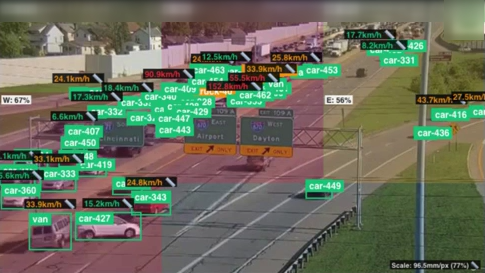
Road detection defines where to look. A specialised YOLO model, chosen over the standard one for lower latency and for tracking distant vehicles, detects cars, and a re-identification algorithm matches the same car across frames to track its trajectory. Homography maps image coordinates to real-world road coordinates, so trajectories become speed estimates. Together these feed congestion, throughput and abnormal-flow metrics, with rule-based alerts when thresholds are crossed. When a potential incident needs investigating, vision-language models interpret selected frames. Operators stay in control: AI acts as an analyst, not an autonomous decision-maker.
Three weeks, idea to integrated system
Beyond the model
StreetSense integrates existing models into a working system rather than training a new one. The engineering was in everything around them: video ingestion, resilient stream processing, low-latency updates, tracking, analytics, evidence storage and the interactive UI. The hard parts were practical ones: video/frame synchronisation, unstable streams, noisy congestion estimates and coordinating several real-time services.
Demonstrated to industry
StreetSense was presented to a major AI and technology group, receiving positive feedback on its technical execution and potential applications in intelligent traffic management. While not commercially deployed, the demonstration showed how existing camera feeds could support a more intelligent, operator-focused traffic monitoring system.
What it demonstrated
Computer vision, real-time data, AI-assisted analysis and human decision-making in one end-to-end system, and how a small AI-enabled team turns an ambiguous opportunity into working software quickly.
Capabilities: Computer vision · AI integration · Real-time systems · Python · Full-stack engineering · Product design